How to calculate a weekly focus score without grading every minute
A practical 0–100 focus score based on showing up, reaching a daily goal, finishing tasks, and following sessions through.
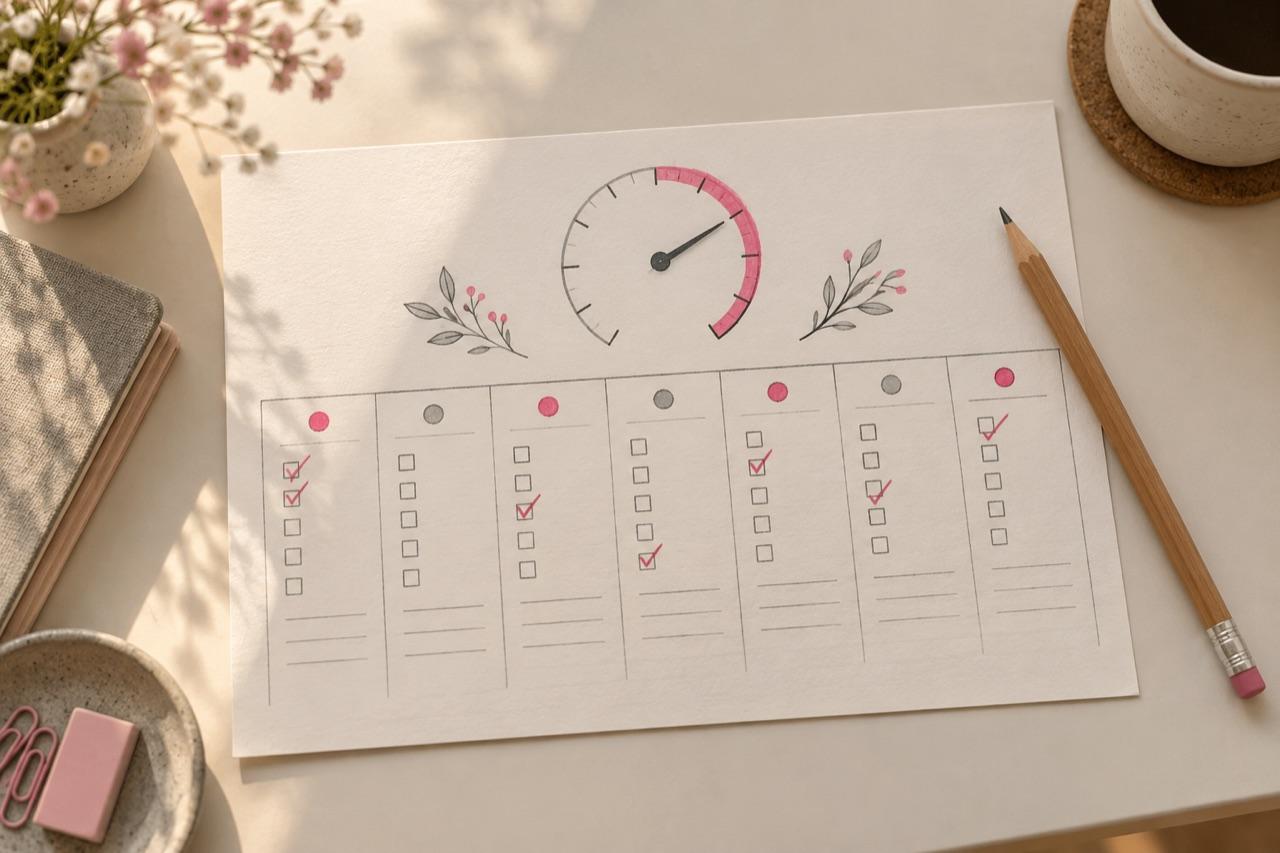
What the score is trying to answer
A useful focus score answers one plain question: did I do the work I intended to do this week? It should not reward sitting at a desk for the longest time. Long days are sometimes necessary, but they are a poor target.
Tockli uses four parts that a person can picture and change: consistency, the daily session goal, cards finished, and follow-through. Together they make a score out of 100.
The four parts of the calculation
Consistency is worth 35 points. Divide the working days when you completed at least one session by the working days you planned. Rest days do not count against you, and one active rest day can cover one missed workday.
The daily goal is worth 30 points. Score each planned workday separately, capped at the goal, then average the days. A huge Wednesday cannot erase an empty Monday and Tuesday.
Cards finished are worth 20 points. Finishing roughly one card per planned workday earns the full component. Follow-through is worth the final 15 points: completed sessions divided by all completed and abandoned sessions.
A worked example
Suppose you planned five workdays. You completed sessions on four of them, reached your daily goal on three, finished four cards, and abandoned one session out of sixteen attempts.
The exact number depends on how many sessions you completed on the two below-goal days, because the goal component gives partial credit. That is intentional. Missing a four-session target after completing three is different from never starting.
Do the arithmetic once a week, not after every session. Tockli also waits for three active days before showing the in-app score, so an empty Monday does not feel like a final judgment on the week.
How to read a low component
Low consistency usually means the start of the day needs work. Make the first card smaller or choose it the night before. A low goal score can mean the goal is unrealistic, especially if consistency is healthy.
Low completion points suggest cards are too large or ‘done’ is vague. Low follow-through usually calls for a shorter timer. None of those fixes require working longer.
Do not optimise the humanity out of it
A score is a prompt for a weekly review. It is not a grade, a medical measure, or proof that one week mattered more than another. Holidays, illness, care work, and emergencies do not fit neatly into a formula.
Set your working days honestly, change the goal when life changes, and use the biggest lost component to choose one experiment for next week. Then close the analytics screen.