Focus analytics should answer what to do next
Minutes are easy to count and easy to misread. Useful focus analytics point to a change you can make next week.
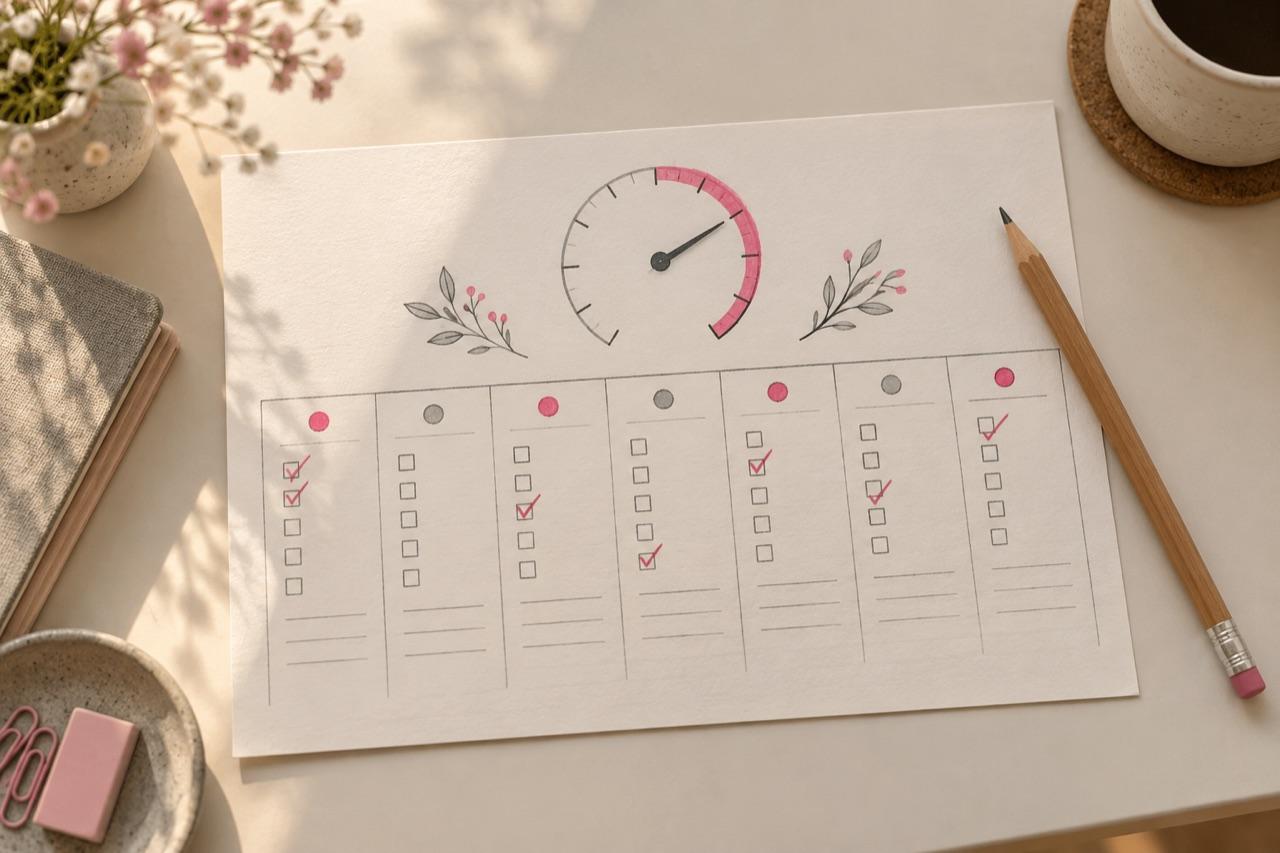
Hours are not the same as progress
A twelve-hour day can be a sign of commitment. It can also be a sign that the work was unclear, interrupted, or badly scoped. Raw minutes cannot tell you which version happened.
Start with questions that lead somewhere: Did I show up on the days I meant to work? Did I finish the sessions I started? Did any cards actually reach done? Those answers are less impressive on a dashboard and much more useful on Monday morning.
Read the pattern, not the verdict
A low week is information, not a character assessment. Maybe you planned five workdays during a week with two days of travel. Maybe every abandoned session was a fifty-minute block that should have been twenty-five. The shape matters.
Look for repetition across a few weeks before changing your system. One chaotic Tuesday is just a chaotic Tuesday.
The four numbers worth keeping
A compact review can fit on one screen. Count active workdays, days you reached your session goal, cards finished, and sessions abandoned. Each number suggests a different adjustment.
- Few active days: make the first session easier to start.
- Active days but missed goals: lower the daily goal or protect a second block.
- Many sessions but few finished cards: split the work smaller.
- Frequent abandoned sessions: shorten the timer before blaming your attention span.
Review once, then get back to work
Weekly is frequent enough to catch a pattern and slow enough to avoid score-watching. Pick one adjustment for the next week. Keep the rest of the system steady so you can tell whether the change helped.
Analytics should end with a decision. If the chart cannot change what you do, it is decoration.