Lightweight sharing is enough for many focus-heavy teams
Small teams often need a shared view of the work, not another system that demands constant tending.
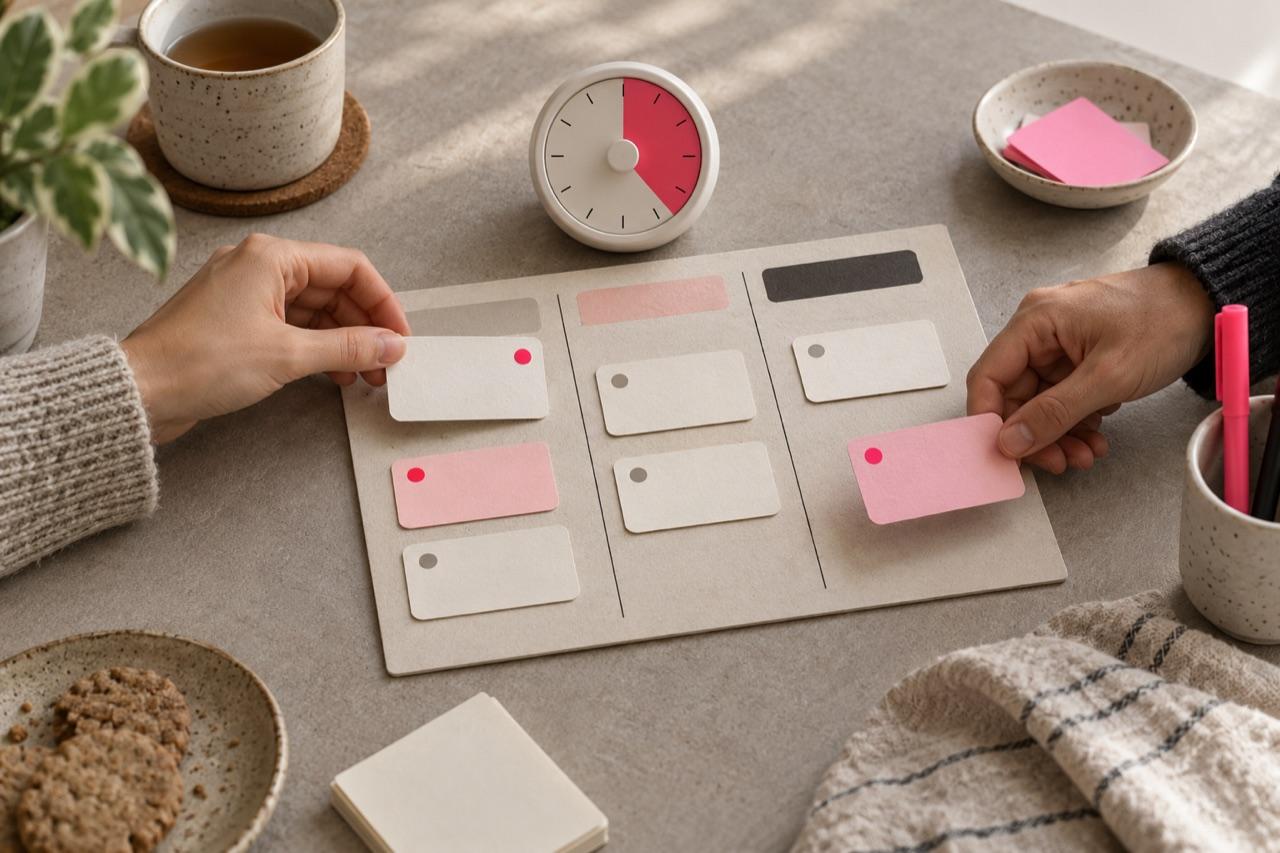
A shared board should answer three questions
What is moving? Who owns the next step? Where is something stuck? If a board answers those questions, a two-person project can get through most days without a status meeting.
Trouble starts when the board tries to capture every conversation and decision. It gets heavier, people stop updating it, and everyone returns to asking in chat. Keep the board for work state. Put long discussions somewhere built for discussion.
Ownership needs to be specific
A card with two owners often has no owner. Give one person responsibility for moving it, even when several people contribute. That does not mean they do every part; it means the team knows who can answer the next question.
Use viewer access for people who need context and editor access for people who change the work. Permissions should mirror the actual relationship, not flatter everyone with admin rights.
Share the outcome, not the surveillance
Focus time is personal. A teammate needs to know that the card advanced, not whether you touched the mouse every three minutes. Attach the useful result to the card and leave the rest alone.
A short session note can replace a surprising amount of reporting: ‘Draft is ready; legal wording still needs a check.’ That is enough context for the next person to act.
A five-minute weekly reset
Once a week, archive finished cards, return abandoned work to the backlog, and split anything that has been in progress for too long. Then stop. A board that needs a forty-minute grooming ceremony has already won the wrong battle.