Focus timer or to-do list? The useful answer is both
To-do lists decide what matters. Focus timers protect time for it. Here is how to connect the two without duplicating your planning.
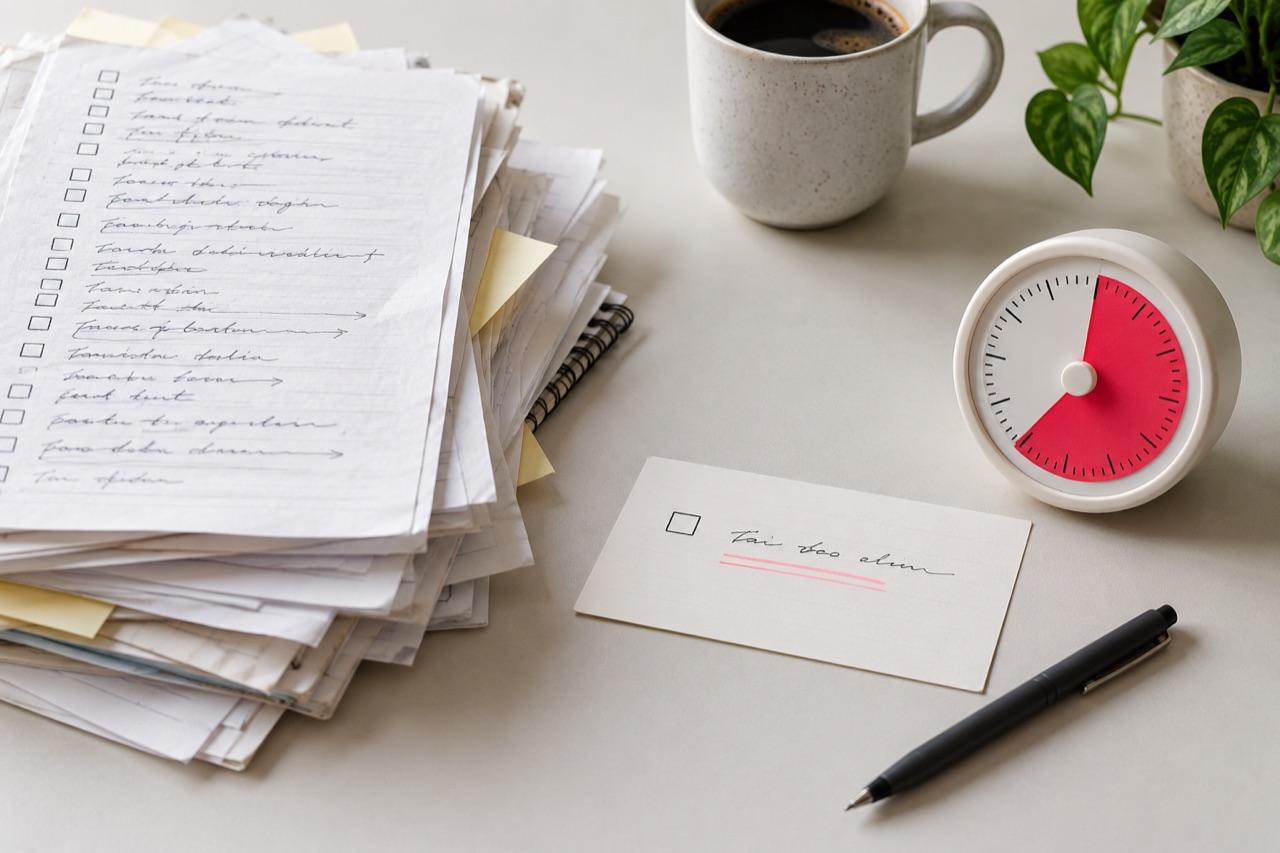
The list and the timer have different jobs
A to-do list stores commitments. It helps you remember, compare, and choose. A focus timer creates a temporary boundary around one choice. Asking either tool to do both jobs usually produces a strange result: an over-engineered timer or a list that never turns into action.
Keep the list broad enough to see your options. Keep the timer narrow enough that there is no doubt what you are doing now.
Why separate apps create friction
The gap looks tiny: copy a task name into the timer, press start, then return to the list when you finish. In practice, that gap is where vague work survives. The timer records forty minutes, but the list still says ‘research’ and nobody knows what changed.
Connecting a session to a card leaves a better trail. The card holds the intention, the timer holds the protected block, and the completion state records the result.
A simple daily loop
Choose up to three cards for Today. Pick one, move it into progress, and start a session. At the end, decide what happened before choosing another card.
- Finished: move it to Done and write a note only if the result needs context.
- Moved forward: keep it in progress and write the exact restart point.
- Blocked: name the blocker and return the card to the right column.
- Wrong task: stop. Choosing again is cheaper than protecting the wrong work for another forty minutes.
What should stay off the timer
Not every task needs a formal session. Sending a two-line reply or renaming a file may take less time than starting the clock. Use timers for work that benefits from a boundary: writing, design, analysis, coding, study, or a batch of small admin tasks.
You are building a useful record, not a complete surveillance log of your day. Leave the trivial bits alone.
When the system is working
The list gets shorter because cards finish, not because you reorganised them. The timer history names the work instead of showing anonymous blocks. And when you sit down tomorrow, the next card is visible.